Running a business in Australia means handling several moving parts at once, from cash flow and compliance to staff and growth planning. Even when things look steady on the surface, many owners still struggle to understand where their money is actually going or what their next financial step should be. This is where a small business accountant starts adding real value, not only during tax season but across the entire year. With the right financial structure in place, your numbers stop sitting in reports and begin supporting practical decisions that shape how your business moves forward.
With the right accounting services for small business, finances shift from reactive to structured. That change becomes even more effective when support is local and connected, as seen with S & H Tax Accountants, who work closely with Australian business owners to align tax, reporting, and day-to-day operations. Instead of isolated services, this approach creates a clearer financial picture, helping businesses move forward with confidence and purpose.
Why do most small businesses struggle to stay in control of their finances?
For many Australian business owners, financial pressure has little to do with effort. Most are already working long hours. The problem usually sits elsewhere, in the absence of a clear financial routine. Figures get entered into systems, but they are not revisited. Bills are settled on time, yet cash flow is not mapped ahead. Tax is dealt with when due dates arrive, rather than being part of ongoing planning. Without consistent accounting services for small business, owners often move from one issue to the next instead of staying ahead of them. Decisions then happen in real time, without a full view of what the business numbers are actually showing.
Over time, the same patterns tend to appear:
- Income and expenses are recorded, but not reviewed closely
- Cashflow is handled in the short term instead of being planned in advance
- Payroll is processed manually, which increases the risk of mistakes
- Tax responsibilities are delayed until deadlines approach
- There is limited visibility into profit, growth potential, or future direction
What role does a small business accountant actually play in financial stability?
A small business accountant brings structure to financial operations by putting practical systems in place that support everyday business decisions, not just compliance tasks. Their role extends across planning, reporting, and forward strategy, helping owners replace reactive management with steady financial control.
- From records to real insight:
When financial data is reviewed regularly, it starts to offer guidance. Sales activity, operating costs, and margins become easier to interpret, allowing business owners to identify what is working and where adjustments are needed. - From reactive to prepared:
Cashflow is tracked ahead of time rather than handled at the last minute. Tax planning becomes part of broader business goals, reducing unexpected outcomes and creating room for smarter use of resources. - From uncertainty to direction:
With consistent financial check-ins, decisions around hiring, pricing, and investment are based on reliable information. This steady approach replaces guesswork with clarity and supports long-term growth.
What does “financial transformation” really look like for a growing business?
Financial transformation does not happen overnight. It shows through smoother operations each week and clearer planning for the months ahead. With the right financial structure in place, uncertainty gives way to control.
In practical terms, this usually means:
- Predictable cash flow – Income and expenses are measured against forecasts, offering early visibility before pressure builds.
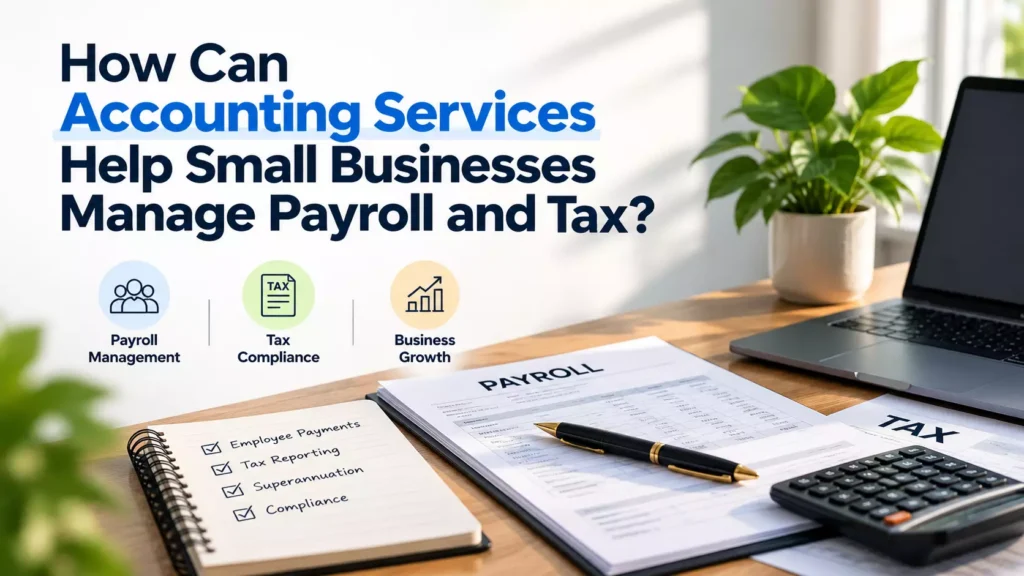
- Structured payroll – A dependable payroll service for small business reduces manual handling while keeping wages, super, and reporting on track.
- Clear tax positioning – Obligations are planned in advance rather than discovered at the last minute.
- Profit visibility – Margins are reviewed regularly, so pricing and costs can be adjusted early.
- Growth readiness – Financial information supports informed decisions around hiring, expansion, and investment.
How do accounting services for small business improve daily operations?
Once a small business accountant is actively involved, finances begin to support daily operations instead of sitting in the background. This is where structure replaces guesswork, and routine tasks start feeding into clearer business decisions.
Rather than working from scattered records, your financial workflow becomes organised around consistent checkpoints:
- Weekly tracking of income and expenses to maintain visibility
- Monthly reporting that highlights trends, not just totals
- Forward cashflow reviews to anticipate pressure points
- Ongoing alignment between spending, revenue, and tax planning
- Regular financial check-ins that guide pricing, staffing, and investment
Why is payroll often the turning point for financial control?
Payroll is one of the first areas where small businesses feel operational strain. It carries legal obligations, affects staff trust, and directly impacts cash flow. When payroll is handled without structure, mistakes tend to surface quickly. This is why many businesses see a shift in financial control once they move to a professional payroll service for small business.
Here’s how the different approaches typically compare:
| Payroll approach | Time required | Compliance risk | Accuracy | Ability to scale |
| DIY / manual payroll | High – handled after hours | High – reporting errors common | Inconsistent | Limited |
| Basic software only | Medium | Medium – relies on owner knowledge | Moderate | Restricted |
| Professional payroll support | Low – managed end-to-end | Low – compliance built in | High | Strong |
When is the right time to work with a small business accountant?
Most business owners don’t reach this point overnight. It usually happens gradually. Things start to feel heavier. Financial decisions take longer. Numbers stop lining up the way they used to. That’s often when a small business accountant becomes part of the picture, not because something has gone wrong, but because managing everything alone no longer feels clear.
- When growth creates complexity
Taking on staff, adding new services, or seeing turnover rise often brings extra reporting, payroll, and cash flow pressure, and this is where proper financial structure starts to matter. - When revenue rises, but confidence drops
Sales can increase while profit stays unclear, and a financial review helps uncover where money is being lost, where margins are tightening, and what opportunities are being missed. - When cashflow feels unpredictable
When income and expenses start shifting from month to month, forward planning becomes important so decisions are guided by visibility rather than urgency. - When planning matters more than survival
Businesses that want to move beyond day-to-day management benefit from structured financial guidance that supports pricing, investment, and long-term direction.
How does S & H Tax Accountants, as a small business accountant, support financial transformation beyond basic accounting?
At S & H Tax Accountants, financial support is built around real business outcomes, not disconnected services. Their approach to accounting services for small business focuses on creating clarity, consistency, and long-term financial direction for Australian business owners. By bringing every financial function under one roof, they help clients move from reactive management to confident planning.
- Integrated tax and financial reporting: S & H Tax Accountants aligns tax planning with real-time financial reporting, allowing clients to understand obligations early while using current data to guide smarter business decisions throughout the year.
- End-to-end payroll management: Through their professional payroll service for small business, S & H Tax Accountants manages wages, super, and compliance in one streamlined process, giving business owners peace of mind and freeing up valuable operational time.
- Bookkeeping designed for cashflow visibility: Instead of only recording transactions, their bookkeeping looks at how money actually moves through the business, helping clients spot income patterns, track expenses, and understand cashflow so they can see where money is going and where small improvements can be made.
- Advisory support connected to growth goals: S & H Tax Accountants look closely at each client’s numbers and use that information to support choices around pricing, staffing, and expansion, helping businesses plan their next steps based on where they are now rather than assumptions.
Strengthen Your Finances for Long-Term Success
Strong finances don’t come together overnight. They take time, visibility, and steady follow-through. Most businesses improve when they stop fixing things at the last minute and start paying attention to how money moves week to week. When reporting, planning, payroll, and compliance are handled as one process, it becomes easier to see what’s working and what needs adjustment. This is where professional accounting services for small business begin to matter, not in theory, but in day-to-day control and longer-term stability.
If you want clearer numbers and a better handle on your finances, S & H Tax Accountants can help you get there. They work with Australian businesses to put a simple structure around reporting, payroll, and planning, so finances feel manageable instead of overwhelming. Rather than reacting to problems as they come up, you start working with a clearer picture of where your business stands. Speak with their team today to see how your finances can be organised in a way that supports smarter decisions and steady growth.