Managing a trust account is more than just keeping money in a separate bank account. You need to record transactions properly, check balances, and keep records that show where the money came from and where it went.
An accountants trust account audit is an independent review of those records. If you’re preparing for one, it helps to know what the auditor will look at, what documents you may need, how the process works and what can affect the cost.
What Is a Trust Account Audit?
A trust account audit looks at the records and transactions of the money held on behalf of clients, customers or other parties. The auditor verifies that transactions have been properly recorded, that supporting documentation exists and that the balance of the trust account is in agreement with the accounting records.
Who Needs a Trust Account Audit?
Not every business with a separate bank account needs a trust account audit. The requirement usually comes from the rules that apply to a particular profession, industry, licence or trust arrangement.
If your business handles client or third-party money, check whether an audit is required and how often it needs to be done.
What Are the Key Requirements for a Trust Account Audit?
Good records are the starting point. You should be able to show money received, money paid out, transfers and the balance held.
Some key requirements might be:
- Separation of trust funds from operating funds
- Proper record keeping of receipts, payments and transfers
- Maintaining trust or client ledgers as necessary
- Regular bank reconciliation
- Maintaining invoices, receipts, payment records and other supporting documentation
- Research into bank and accounting ledger differences
- Maintaining records for the necessary period
What Is the Trust Account Audit Process?
The process generally begins with the preparation of records- bank statements, ledgers, reconciliation reports and documents that support the transactions.
The auditor goes through the records, checks transactions and reconciliations, and asks questions about anything that doesn’t seem right. Issues may need more information or corrections.
The auditor then prepares the required audit report or documentation. Any filing or reporting steps depend on the rules that apply to the trust account.
How Much Does a Trust Account Audit Cost?
There’s no single price for a trust account audit. The cost depends on how much work is involved.
A small account with fewer transactions and with records that are in order will take less time. Several accounts, high transaction volumes, multiple ledgers or records that need investigation can increase the work.
When asking how much does a trust account audit cost, ask what’s included in the quote. It should explain the audit scope and any possible extra work.
What Can Increase the Cost of a Trust Account Audit?
Poor records will lead to increased time taken during the auditing process. Lack of documentation, unbalanced accounts, wrong accounting and discrepancies may require additional effort to fix.
Time taken is dependent on the number of transactions involved. The presence of several trust accounts or complex transactions could increase the amount of work.
Preparation of records prior to auditing will help minimise delays.
What Records Should You Prepare for the Audit?
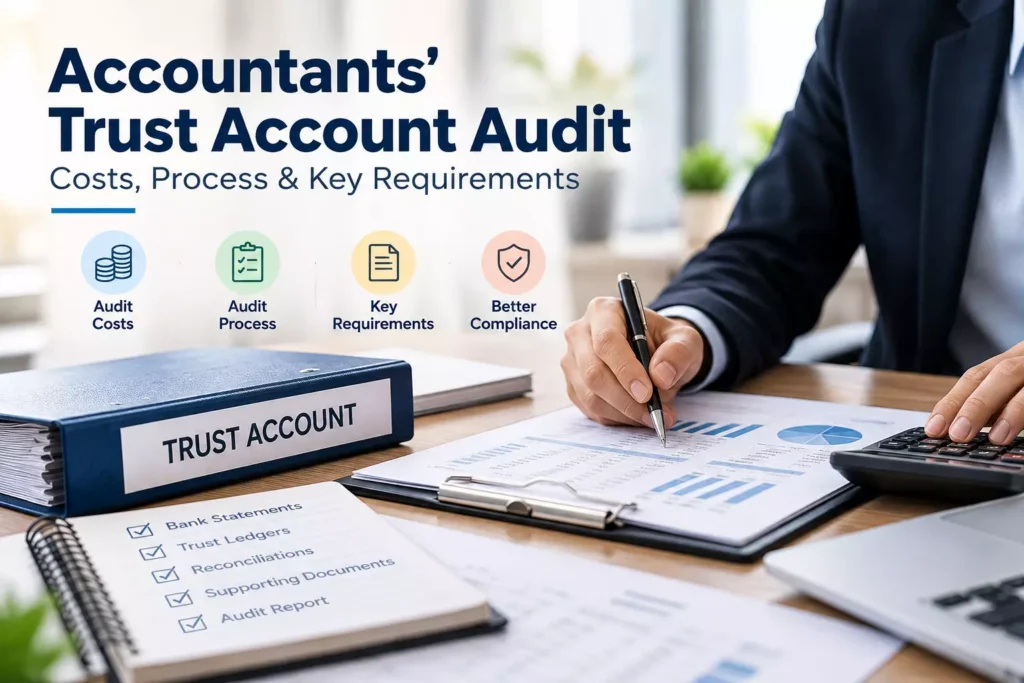
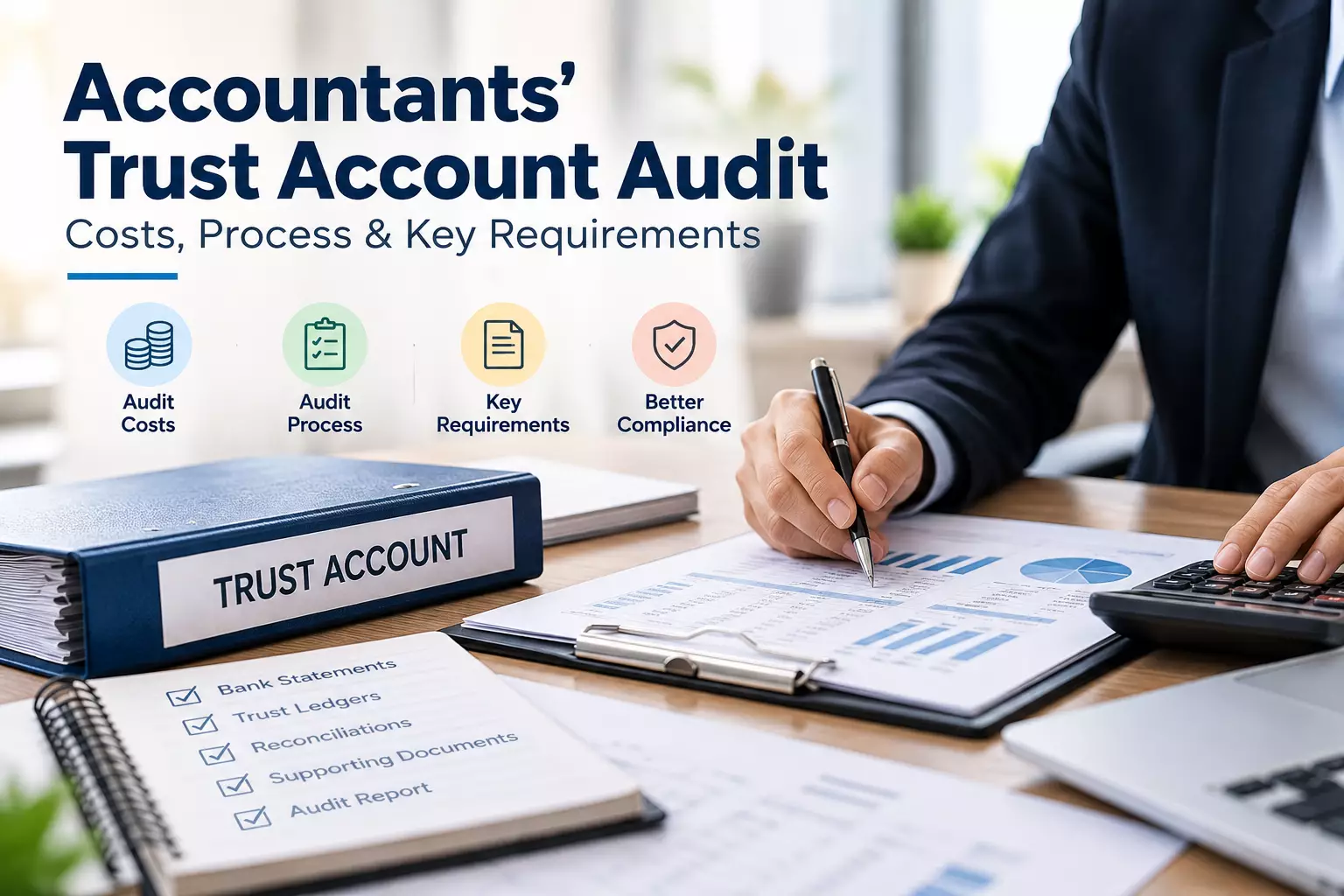
Depending on the trust account that is to be reviewed, the common documents required include:
- Bank statements of the trust account
- Trust account or customer ledger
- Receipt and payments vouchers
- Transfer records
- Bank reconciliation statements
- Documents justifying transactions
- Payments authorization slips
- Other vouchers explaining receipt and payment transactions
Keep the documents sorted so that the audit of the transactions does not have to search among irrelevant documents.
Why Work With Accountants for Trust Account Audit Support?
An accountant can review records before the audit. That may include checking reconciliations, looking for missing documents, reviewing unusual entries and helping resolve differences.
This doesn’t replace the auditor. It just helps get the accounts into better shape before the audit starts.
Why Is a Trust Account Audit Important for Real Estate Businesses?
Funds held by real estate firms could include money owed to them from customers or third parties. It is important that these funds are documented accurately because they do not belong to the firm in question.
A real estate accountant’s trust account audit is an impartial check on how funds have been booked and managed. This may be a good way to uncover missing documentation or any other discrepancies.
Documentation becomes essential where there are dealings between various parties or larger sums of money are involved. Accountants skilled in trust accounting will be able to assist with the preparation of necessary documents before conducting an audit.
This largely depends on the specific type of trust account and the regulations guiding the firm.
How Can You Prepare for a Smooth Trust Account Audit?
Start preparing before the audit deadline. Check that reconciliations are up to date, supporting documents are available and old differences have been investigated.
If you find an error, deal with it before the audit where you can. Keep trust account records organised through the year rather than trying to rebuild months of records just before an audit.
Choosing the Right Trust Account Audit Support
When choosing accountants for trust account audit support, look for someone familiar with the type of trust account your business operates. Ask what they will review, which documents they need, what experience they have and what’s included in the fee.
If your business needs help with accounting and trust account audit support, S & H Accountants can assist you to organise records and resolve issues ahead of the audit process.
FAQs
-
- How much can a trust account audit cost?
There’s no standard cost. It depends on the number of transactions, accounts, records and work required. - How long does a trust account audit take?
It depends on the size and condition of the records. Organised accounts are generally easier to review. - What happens if the auditor finds an error?
The auditor may request supporting documentation or an explanation. The records may need to be adjusted, depending on the problem. - How often is a trust account audit required?
It depends on the rules that apply to the specific trust account and business.
- How much can a trust account audit cost?