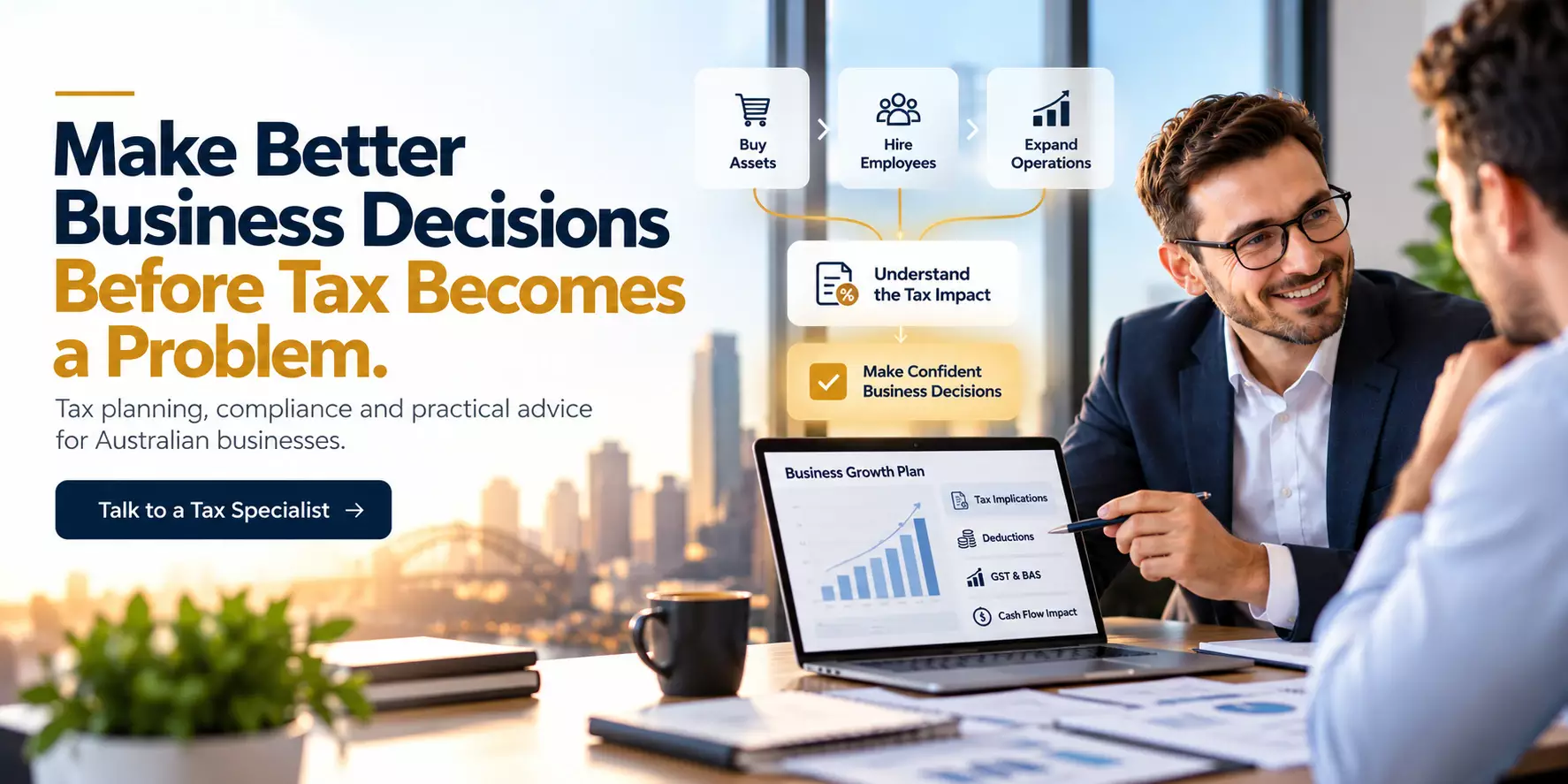
Tax is connected to many of the decisions a business makes during the year, not just its annual tax return. Hiring employees, purchasing assets, changing a business structure, managing expenses, or expanding operations can all have tax implications.
A company tax consultant can help a company comply with these requirements as well as advise on tax planning, compliance and other financial decisions. Before choosing a professional, it is worth understanding what tax consultant services businesses typically need, what affects the cost, and when specialist advice can be useful.
What Does a Company Tax Consultant Do?
They help your business meet its tax obligations and make better calls on tax-related matters. That can mean preparing tax returns, going through your financial records, giving planning advice, or just explaining what you have to report and when.
What you need depends on your business. Some companies only want the annual return done. Others need help with GST, payroll tax, deductions and planning all year round.
What Tax Consultant Services Can Businesses Expect?
It varies by provider, but here’s what you’ll usually see.
Tax Return Preparation
The consultant prepares and checks your business tax returns using your financial records. Companies have their own tax and reporting rules, so you need accurate records and you need to hit your deadlines. Easy to say, harder to do when you’re busy running the place.
Tax Planning and Advice
Planning is about looking at the tax impact before you make a move. Thinking of buying equipment, upping your spending or changing something big? A consultant can work out how it might affect your deductions and your future tax bill. Better to know up front.
BAS and GST Support
If you’re registered for GST, you’ll probably be lodging Business Activity Statements. A tax professional can go through your GST figures and make sure the reporting is covered.
Business Structure and Tax Considerations
Your structure changes how your income is taxed and what obligations you have. If you’re not sure your current setup still makes sense, or you’re thinking about changing it, a tax consultant for business can explain the tax side first.
Ongoing Tax Compliance
Tax doesn’t end once the return goes in. With regular support, you keep your records in order, see deadlines coming, and can ask questions as they pop up instead of letting them pile up.
When Does a Business Need a Tax Consultant?
Plenty of owners handle tax themselves early on, and that’s fine. It tends to get harder when:
- You’re starting a business or restructuring one
- You’ve taken on staff
- Turnover and transactions are going up
- You’re buying significant assets
- GST or other tax obligations are getting tricky to manage
- You’d like proper help with tax planning
- Tax is starting to affect your wider business plans
And you don’t need the same amount of help all the time. A small business might only need a consultant now and then. A growing one often gets more out of regular advice.
What Is the Difference Between a Tax Consultant and an Accountant?
It mostly comes down to scope. A tax consultant is focused on tax. Generally, an accountant provides a broader spectrum of services, which include financial and accounting services as well. Nevertheless, there is quite an overlap between the two services; therefore, instead of focusing on their names, you should concentrate on their offerings.
| Area | Tax Consultant | Accountant |
| Main focus | Tax compliance, planning and advice | Broader accounting and financial management |
| Tax returns | Prepares and reviews business tax returns | May handle tax returns alongside other services |
| Tax planning | Focuses on tax obligations and planning | May provide tax planning as part of wider support |
| Bookkeeping | May offer bookkeeping services | Often handles or oversees bookkeeping |
| Financial reporting | Mainly supports tax and compliance needs | Prepares reports to assess business performance |
| Business decisions | Explains tax implications | Provides broader financial information |
How Much Does a Tax Specialist Cost?
There is no single price. Tax specialist fees will depend on what you need done, the complexity of your business and how often you need help.
Things that affect the cost:
- Your business structure and size
- How many transactions you have, and how complex they are
- Your tax return requirements
- GST and BAS responsibilities
- Whether bookkeeping or accounting is part of the deal
- Whether you want ongoing tax planning
- Hourly rate or fixed fee
Before you engage a professional, ask what the quoted fee actually includes and whether extra work gets billed separately. If the fee structure is clear, comparing providers is a lot simpler.
Why Work With Business Tax Specialists?
When tax becomes too much to handle internally, a specialist can take over. They can explain what you need to do, identify any deductions and concessions you may be entitled to and help you plan for future tax bills.
They also handle a lot of the admin, like putting together your tax records and getting the information ready for reporting. And if your finances are changing, it helps to have someone to ask before you make a decision instead of after.
How Do You Choose the Right Tax Consultant for Your Business?
Check for related experience, proper registration, fees and services that fit your business.
First, ensure that they are registered to provide tax agent services. The practitioner is listed on the register provided by the Tax Practitioners Board of Australia. Also, find out if they have had dealings with other businesses in the same industry and the services offered.
Further, consider whether you need tax agent services periodically or continuously. If you’ll need regular advice, someone who offers ongoing support will probably suit you better than someone who only does returns.
What Should You Ask Before Hiring a Tax Consultant?
A few simple questions go a long way:
- What’s included in your fees?
- Do you work with businesses like mine?
- How do you work out your fees?
- Who’ll be managing my account?
- Do you offer ongoing tax advice?
- Are you registered to provide the services my business needs?
How they answer will tell you if they’ve got the right experience, services, communication and pricing for you.
Getting the Right Tax Support for Your Business
A corporate tax consultant does more than prepare a return once a year. The right one helps with compliance, planning, reporting and the day-to-day decisions that have tax consequences.
What suits you best depends on your structure, your financial activity, how complex things are, and whether you want ongoing support. S & H Accountants provides tax and accounting support built around the financial needs of businesses.
FAQs
- Is a tax consultant worth it for a small business?
Often, yes. Especially when tax is getting hard to manage or you want proper advice and planning.
- Can a tax consultant help with business tax planning?
Yes. They’ll look at your situation and point out planning opportunities and obligations that apply to you.
- How often should a business speak to its tax consultant?
Depends on the business. Some only need a yearly check-in; others do better with regular advice throughout the year.
- What affects the cost of tax consultant services?
Mostly business size, complexity, the services you need, your reporting obligations, and how often you need support.