Managing finances is one of the most important aspects of running a small business. After all, in every successful company, there is an organised system behind it. Although it may not be the most appealing aspect of a business, having the right accounting process in place, making sure the numbers add up, and being prepared regarding tax and other requirements will make your work significantly easier.
Many business owners are more worried about growth and day-to-day operations, but it is important not to overlook the financial side of the operation. Services from small business accountants can help you focus on the most important tasks and make sure that you don’t miss anything.
Tip 1: Keep Your Business and Personal Finances Independent
This one sounds obvious, but a surprising number of small business owners don’t do it properly from the start.
Open a dedicated business bank account and run everything through it. It makes tracking income and expenses straightforward, simplifies tax time, and helps identify what’s actually deductible without having to go through months of personal statements to find business transactions buried in there.
When you mix personal and business transactions, it can create ambiguity and confusion when trying to see the true performance of your business. This also complicates the accounting practices at the end of the financial period.
Tip 2: Review Your Cash Flow Regularly
Profit and cash flow aren’t the same thing. A business can be turning a profit on records while simultaneously struggling to pay its bills if timing is off.
| Area to Monitor | Why It Matters |
| Customer payments | Tracks expected income |
| Business expenses | Shows where money is going |
| Supplier payments | Helps manage outgoing costs |
| Tax obligations | Allows better financial planning |
Checking cash flow regularly, not just at tax time, means problems surface when they’re still manageable rather than when they’ve already become a crisis.
Tip 3: Keep Records Updated Throughout the Year
Most of the stress around tax time comes from trying to reconstruct months of transactions from memory and a pile of unsorted receipts.
Keep on top of:
- Sales invoices
- Expense receipts
- Bank statements
- Payroll records
- Tax documents
If records are current, your accountant can actually advise you properly throughout the year instead of just cleaning up a mess at the end of it.
Tip 4: Get Payroll Right From the Start
Paying people isn’t just transferring money. There are calculations, reporting requirements, and records that all need to be accurate and on time.
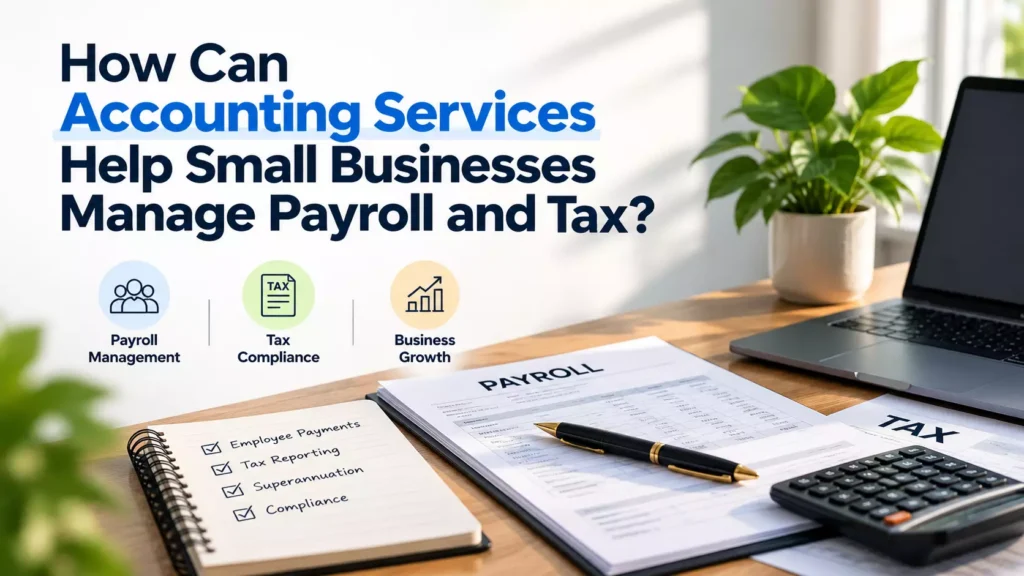
A payroll service for small businesses handles the parts that trip people up- calculations, reporting, record-keeping- so that as the team grows, payroll doesn’t become something you’re constantly worried about getting wrong.
Getting this wrong has real consequences. Getting it right early is considerably easier than fixing it later.
Tip 5: Actually Read Your Financial Reports
Financial reports aren’t documents your accountant produces once a year for the tax office. They tell you what’s actually happening in the business.
Three worth understanding:
Profit and Loss Statement — income minus expenses over a period. Tells you whether the business is making money.
Balance Sheet — what the business owns versus what it owes at a point in time.
Cash Flow Statement — how money is actually moving. A business can show a profit and still run out of cash. This report shows why.
Making decisions without understanding these is like driving without looking at the dashboard.
Tip 6: Don’t Leave Tax Planning Until It’s Urgent
Tax obligations don’t shrink because you didn’t think about them. Dealing with them throughout the year is far less painful than dealing with them when a deadline is close.
Practically that means:
- Recording expenses as they happen
- Knowing what the business can actually claim
- Setting money aside for tax rather than spending it and scrambling later
- Keeping records organised so nothing gets missed
Working with business tax specialists means you understand your obligations properly and aren’t making decisions based on guesswork. A company tax consultant gives advice based on your actual structure- not generic information that may not apply.
Tip 7: Know When to Get Professional Help
Most small businesses start simple. They don’t stay that way.
Bringing on staff, growing revenue, managing more complex tax obligations, at some point, handling it all without professional accounting support costs more than it saves.
Worth getting help when:
- Transaction volume is growing
- You’re hiring employees
- Tax is getting complicated
- You’re making decisions that need proper financial input
Professional accounting services for small business cover the things that take time and expertise to get right- reporting, tax, compliance, planning.
S & H Accountants works with small business owners who need more than just a tax return done once a year.
Tip 8: Find an Accountant Who Actually Gets Your Business
There’s a difference between an accountant who files your tax return and one who understands your business well enough to give you useful input throughout the year.
| Factor | Why It Matters |
| Experience | Helps understand the specific challenges your business faces |
| Communication | Makes financial information easier to actually use |
| Tax knowledge | Supports better compliance and planning |
| Advisory support | Helps with decisions beyond just the numbers |
Finding the best small business accountant Melbourne businesses can rely on is about more than completing tax returns. Whether you need a tax accountant Cranbourne or ongoing accounting support, the right professional should understand your business needs and provide guidance throughout the year.
Building Better Financial Habits
Good accounting is not something businesses should only focus on during tax season. Separate accounts, current records, regular cash flow reviews, proper payroll, and a small business accountant who knows what they’re doing- these things compound over time into a business that’s considerably easier to run and grow.
S & H Accountants helps small business owners build that foundation and maintain it- so finances stop being something that causes stress and start being something that actually helps with decisions.
FAQs
1. When should a small business hire an accountant?
When managing your money is taking up too much of your time, tax is becoming complicated, or you’re making growth decisions that require sound financial input.
2. Can an accountant help with tax planning?
Yes, identifying deductions, planning ahead, keeping records in order, and making sure obligations are met without last-minute stress.
3. What records should small businesses keep?
Invoices, receipts, bank statements, payroll records, and tax documents. Current throughout the year, not reconstructed at the end of it.
4. Do small businesses need payroll support?
Once you have employees and payroll gets more involved, having proper support in place is easier than managing errors and compliance issues without it.
5. What’s the difference between accounting and bookkeeping?
Bookkeeping is the recording of events. Accounting interprets it, prepares reports, manages compliance and advises the business on what that means.